halfByte
One identity, from the mark to the page.
Identity, layout and development for a developer-talent brand, with historical Figma exports documenting the visual direction.
Identity and website · Circa 2025
Visual identity, page layout and development
Context & challenge
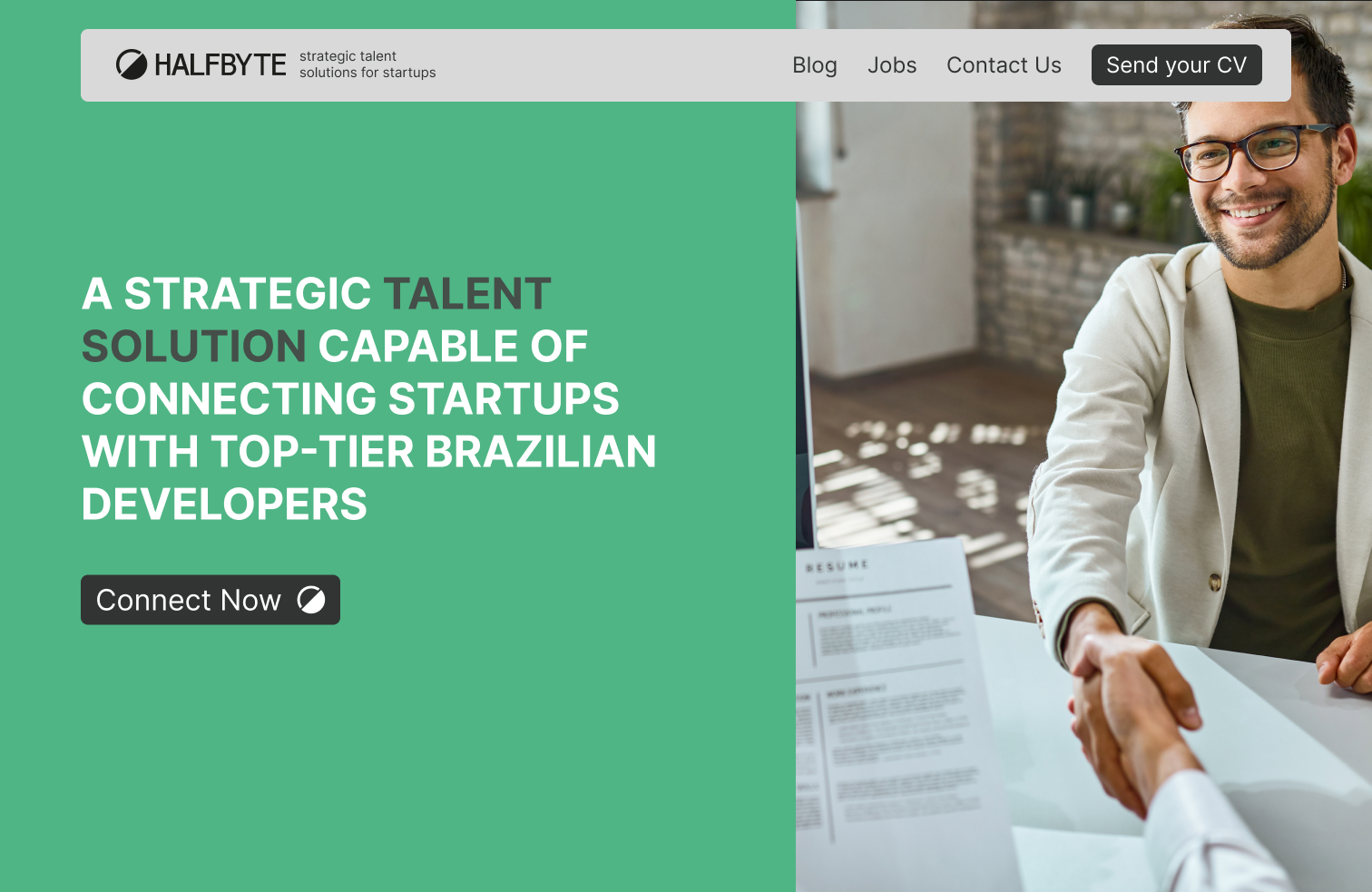
halfByte connects developer talent with startups. The supplied Figma exports document a green-and-charcoal visual identity, a complete dark page concept and an alternative photographic hero.
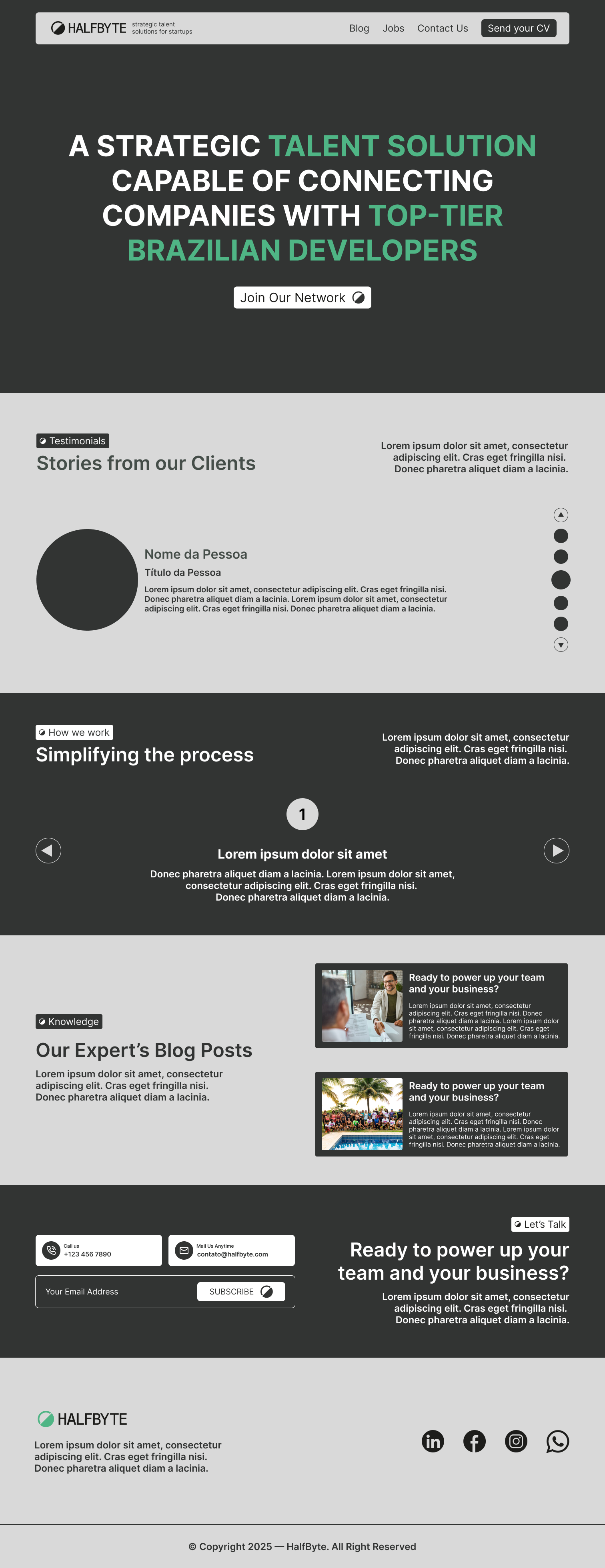
The design needs to connect a recognizable identity with a clear introduction to the service, a process explanation and a contact path. The archive makes those composition decisions visible while remaining distinct from the current live website.
My contribution
- Owned
- Visual identity, layout and development. Carlos explicitly confirms responsibility for all three.
- Assets
- Photography and third-party marks retain their respective ownership; the case credits Carlos’s identity and interface work.
Decisions & delivery
Build recognition around a simple mark.
The supplied logo and graphic variants use a divided circular form. Green, charcoal and restrained neutral tones connect that mark to the page and its graphic treatments.
Use contrast to structure the page.
The dark page concept alternates dark and light sections to separate the introduction, client-story specimens, process, editorial content and contact area. The alternative hero explores a split between a green message panel and photography.
Carry the direction into development.
Carlos confirms that his responsibility extended from the identity and layout into development. The selected evidence here documents historical design concepts; it does not substitute those concepts for a current live-site capture.
A closer look



What this work shows
The contribution spans identity, page composition and implementation. The archive connects a compact visual mark with a larger editorial hierarchy, while Carlos’s confirmed scope establishes who carried that direction into development.
Carlos confirms identity, layout and development authorship. The estimated activity year is circa 2025, based on his recollection. These are historical Figma design exports, not current live-site screenshots. Sample copy and testimonial specimens are not endorsements or verified outcomes; third-party photographs and marks are not attributed to Carlos.